
Abstract
Sex differences in liver gene transcription are extensive and are regulated by the sex-differential stimulation of hepatocytes by male versus female plasma patterns of growth hormone (GH). These actions of GH are mediated by combinatorial interactions of several GH-responsive liver transcription factors (TFs), including STAT5 and HNF6, whose sex-biased binding to liver chromatin correlates strongly with the sex-biased expression of neighboring genes. Here, we examine the hypothesis that this sex-biased TF binding is determined by sex-differential chromatin accessibility in combination with sex-biased histone marks and sex-biased binding by cofactors. We used chromatin state maps based on chromatin accessibility and a set of 6 histone marks in male and female mouse liver to cluster binding sites of multiple TFs in male and female liver, including sex-biased binding sites according to the sex bias of their local chromatin state. The sex-biased TF binding sites analysed correspond to STAT5, HNF6, FOXA1, FOXA2, BCL6, CEBPA, and CUX2 . Clusters comprised of a subset of sex-biased STAT5 and HNF6 sites were localized to genomic regions in a sex-differential chromatin state, notably, enhancer states in the sex where TF binding is stronger, and inactive or bivalent states in the sex where TF binding is weaker. Whereas the sex-biased STAT5 binding sites were often associated with sex-differences in chromatin accessibility, the sex-biased HNF6 binding sites were frequently associated with differences in chromatin state, without differences of chromatin accessibility. Further, a substantial fraction of sex-biased STAT5 binding is associated with an enhancer state in both male and female liver, in many cases with a sex bias in chromatin accessibility. However, with HNF6, a smaller subset of sex-biased binding is associated with an enhancer state in both male and female liver, and often without a sex bias in chromatin accessibility. Further, a subset of sex-biased STAT5 and HNF6 binding sites localized within enhancer states, and a subset of female-biased HNF6 sites localized within transcribed-like states and are not in regions of accessible chromatin. This association of sex-biased STAT5 and HNF6 binding at genomic regions in a sex-independent chromatin state suggests that factors other than chromatin accessibility and local chromatin state can confer sex bias in TF binding. These findings highlight the utility of using chromatin marks to identify functional genomic elements, and provide insights into the hierarchy of TF binding interactions that mediate sex-specific gene regulation in mouse liver.
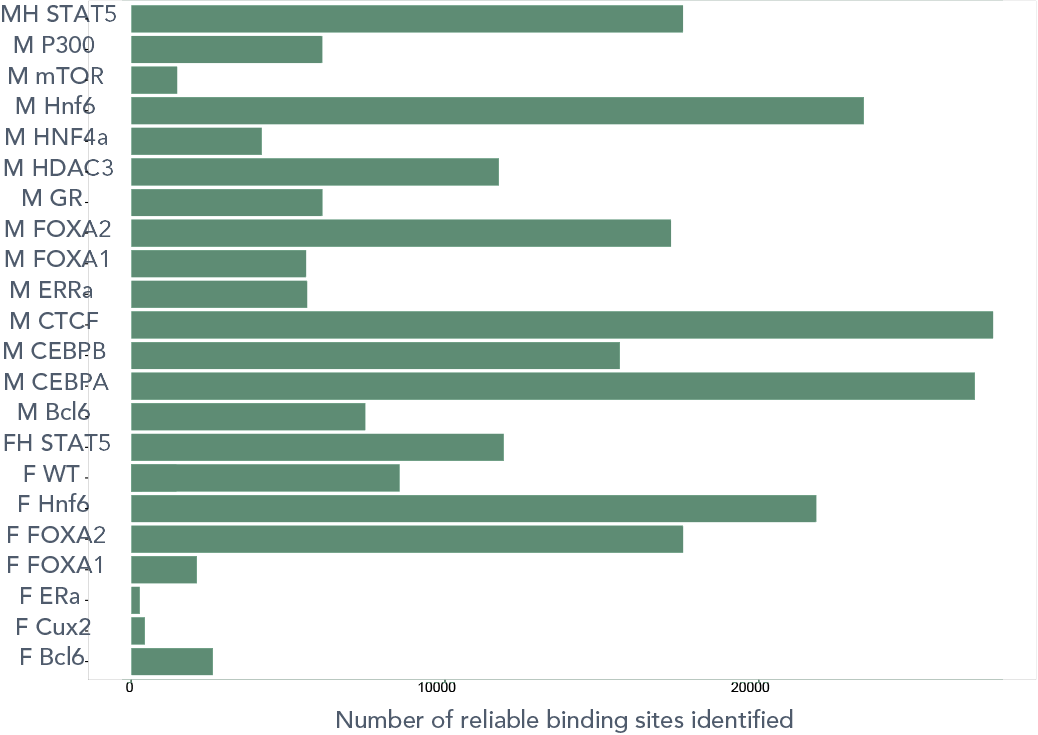
Transcription factor binding data sets
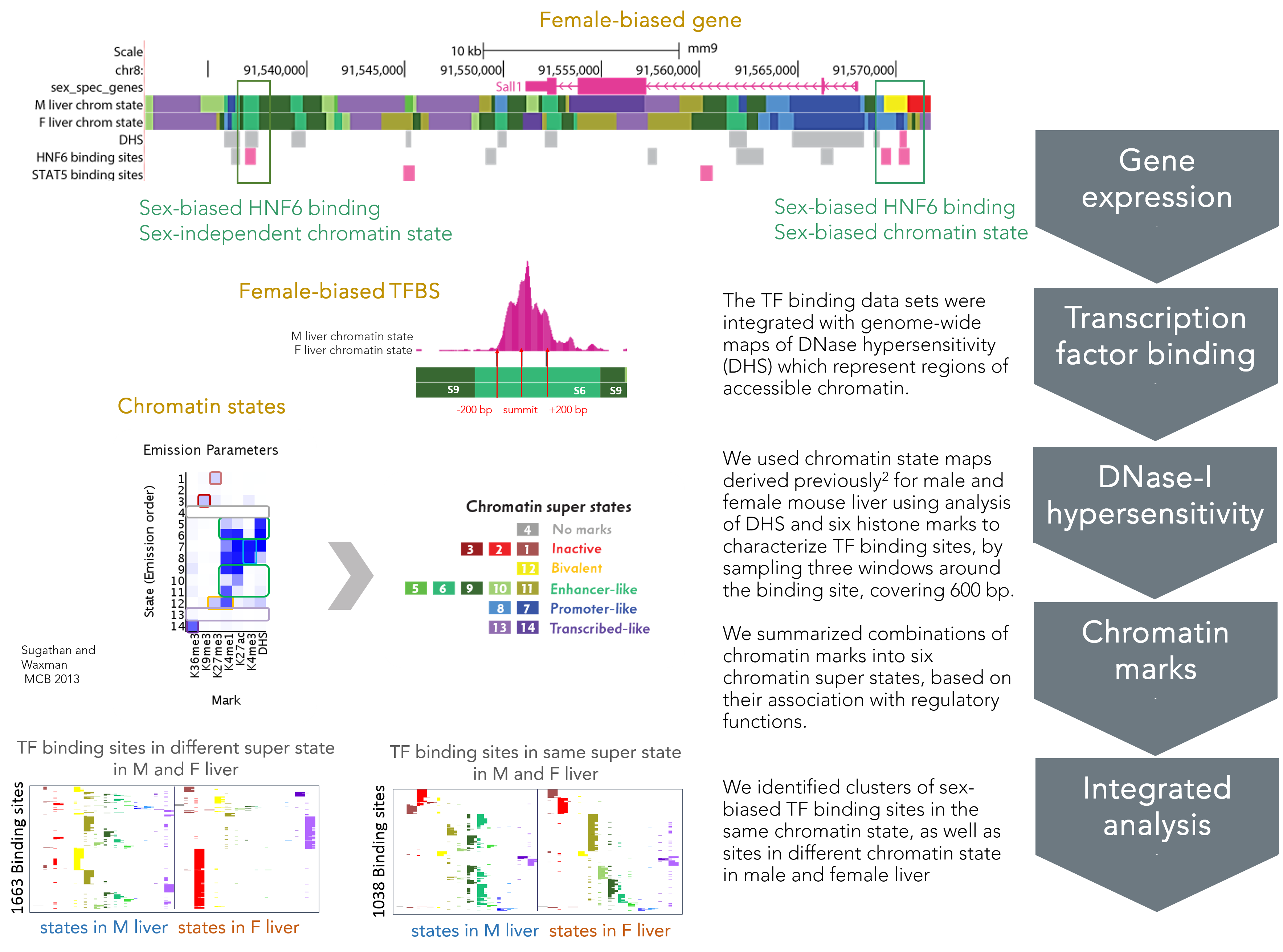
Clustering TF binding sites by sex-differential patterns of chromatin states
TFs show different preferences for binding in chromatin states

The majority of the TF data sets studied are associated primarily with chromatin-state 6, which is an enhancer chromatin state, as expected.
However, a few factors, including BCL6 and ERa in female liver, and mTOR in male liver, display binding that is more frequently associated with promoter-like states.
In addition, other factors, namely ERRa in female liver, and HNF6 both in male and female liver, show association with transcribed-like states, promoter-like, and bivalent chromatin states.
Sex-biased TF binding is associated with different patterns of chromatin states
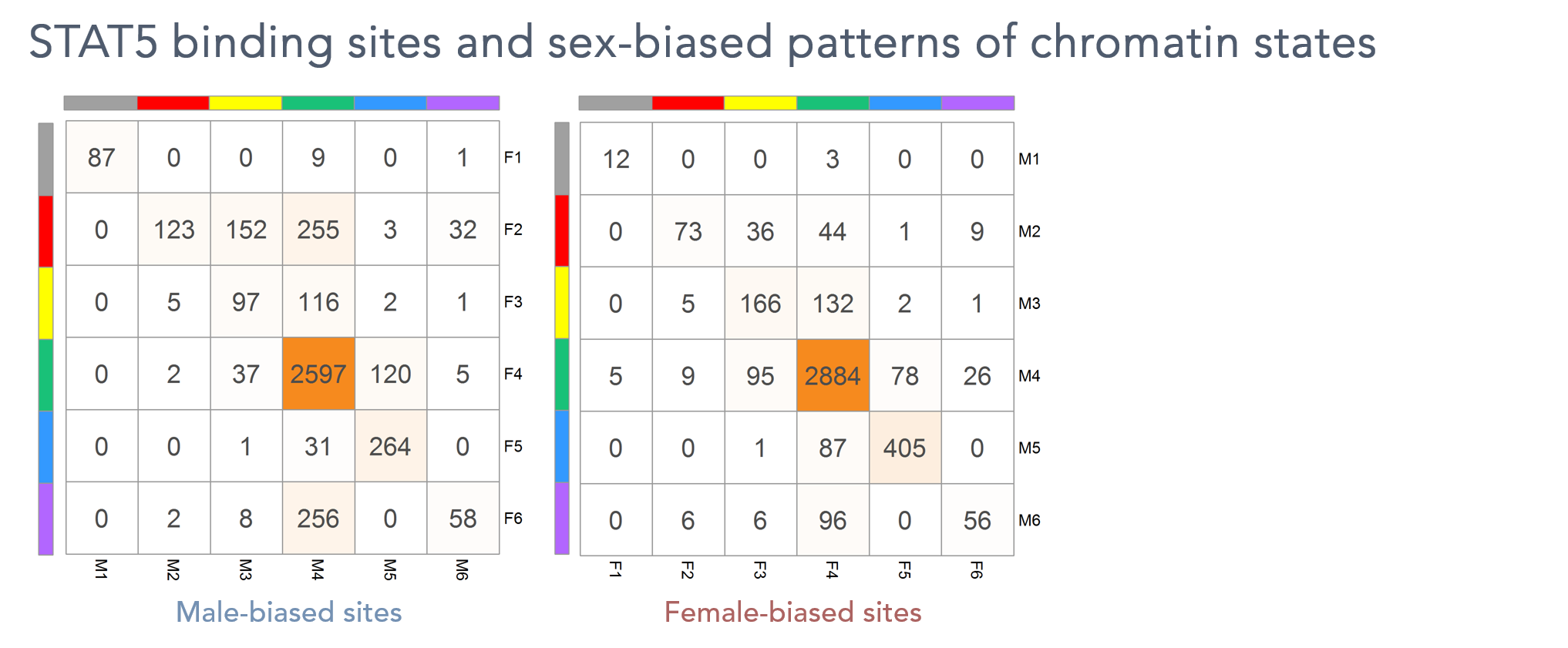
The majority of sex-biased STAT5 binding (~58% of M-STAT5, ~64% of F-STAT5) takes place in genomic regions in enhancer states in M and F liver. Half of M-STAT5 and one third of F-STAT5 sites are associated with sex-biased DHS.
A subset of the sex-biased STAT5 sites are found in an active state in the sex where TF binding is more prevalent, and bivalent or inactive states in the sex where TF binding is weaker: M-STAT5 sites in M4-F2 states, F-STAT5 sites in F4-M3 and F4-M2
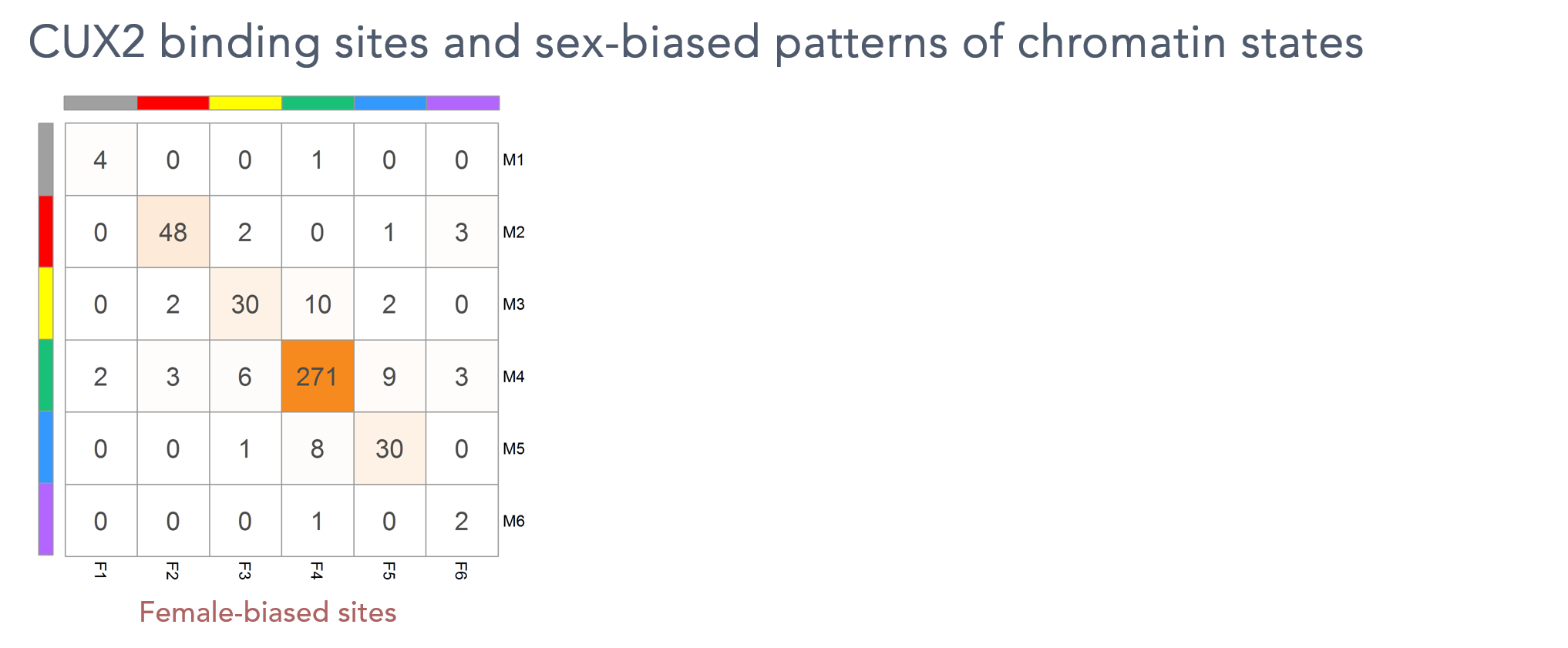
Summary of findings
- As expected, most of the transcription factors studied showed substantial binding taking place in genomic regions in active chromatin states.
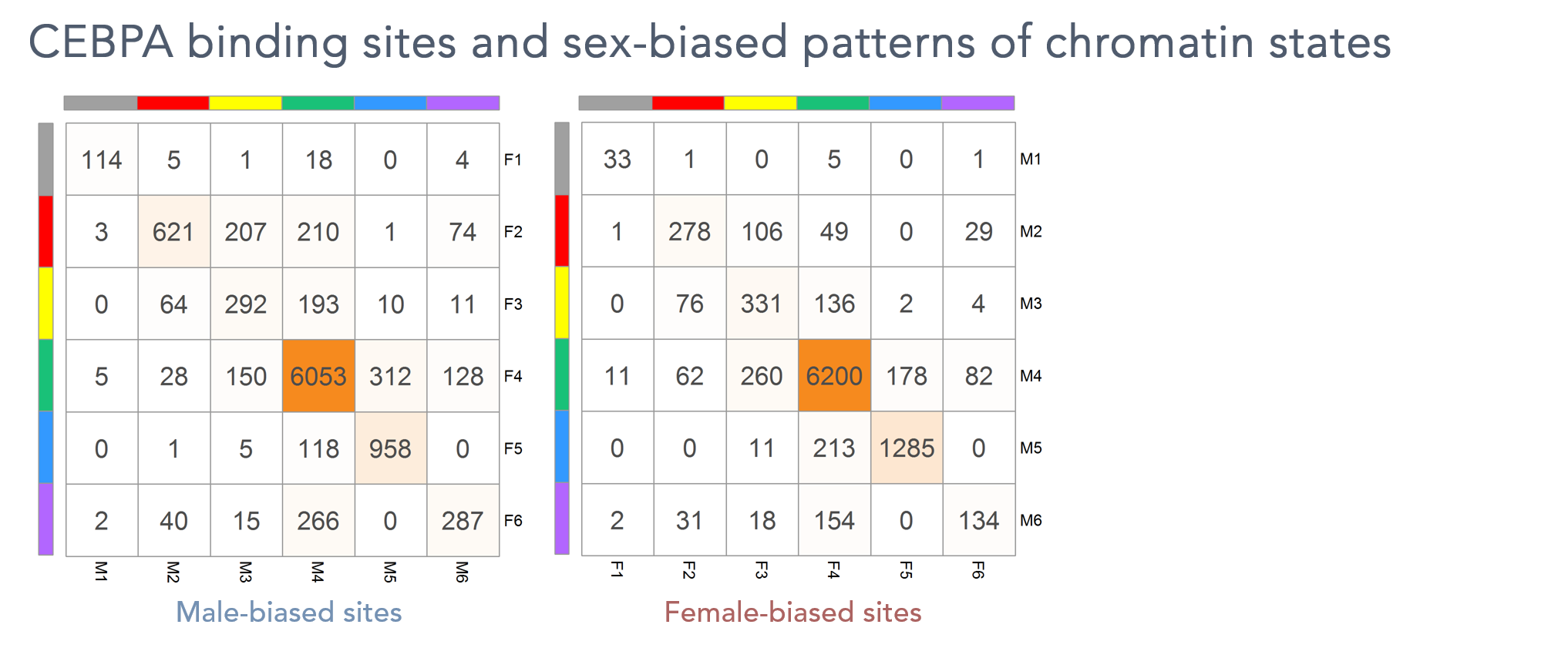
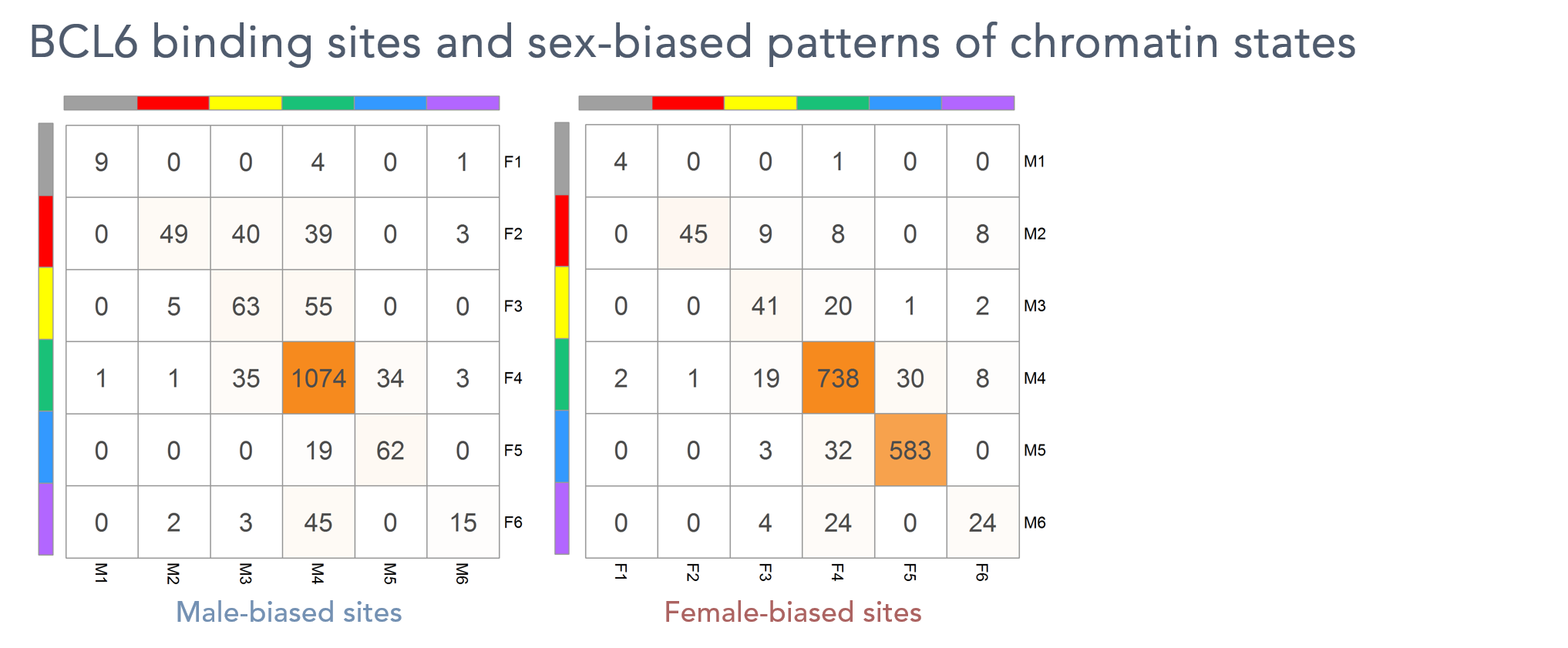
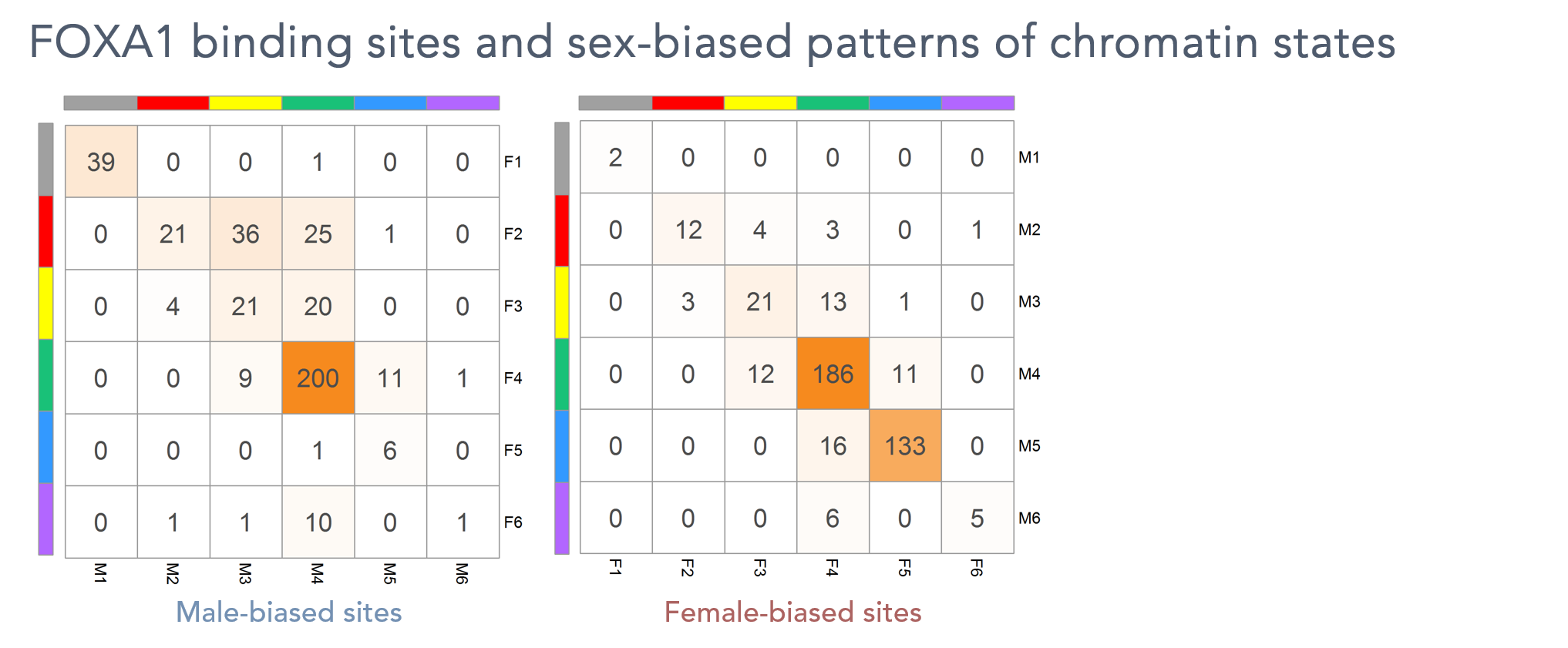
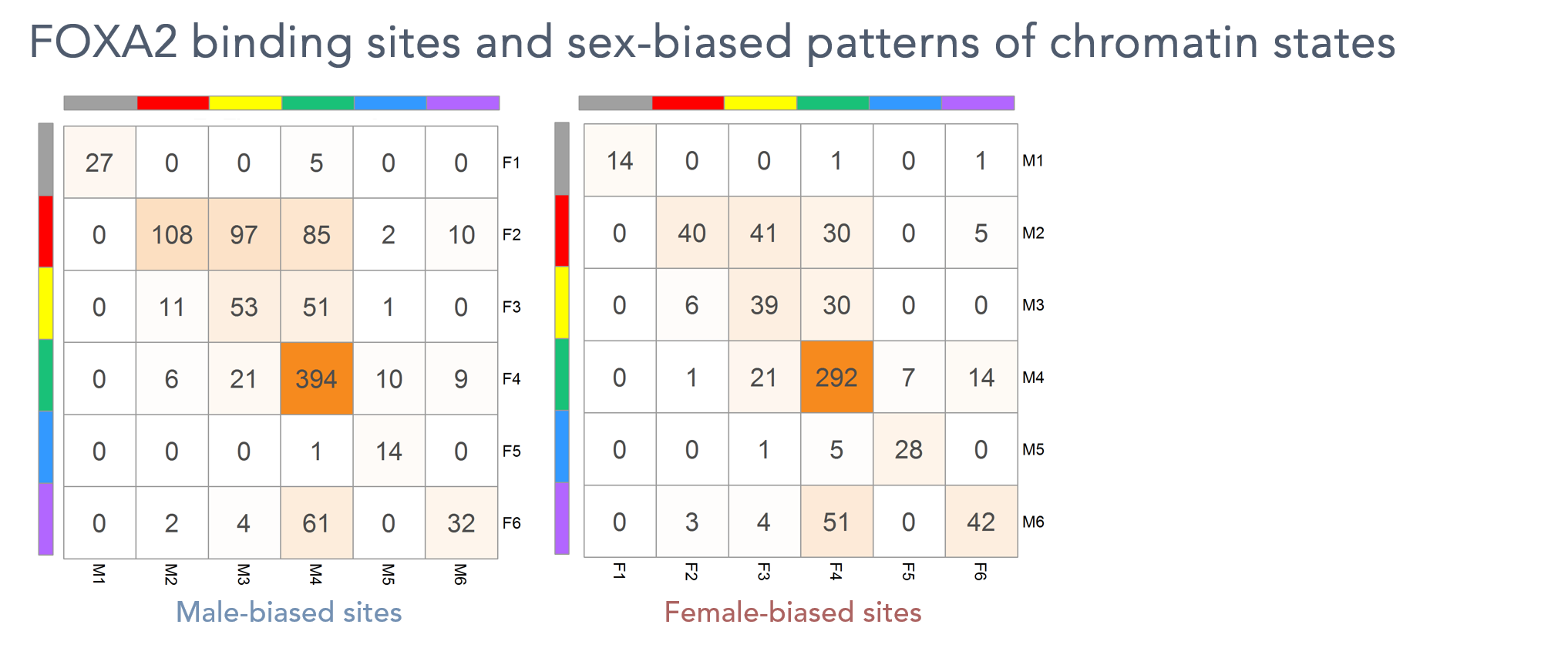
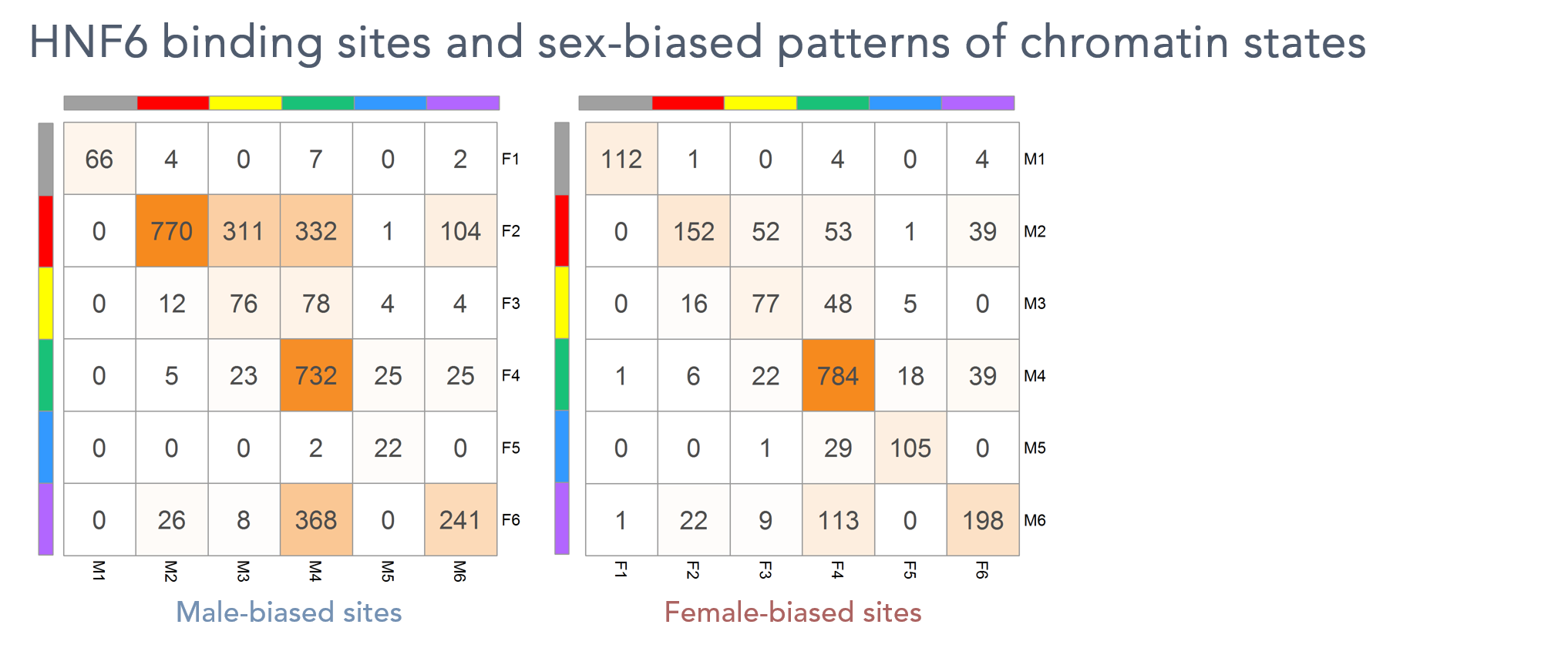
- Clusters comprised of a subset of sex-biased STAT5, HNF6 , CEBPA, FOXA1, FOXA2, CUX2 and BCL6 sites were localized to genomic regions in enhancer states.
- Various TFs show different preferences of chromatin states, with the majority of STAT5, CEBPA, FOXA1 and FOXA2 binding taking place in genomic regions in enhancer states, and HNF6 and CUX2 binding associating with inactive chromatin states, in addition to enhancer states.
- Most of the sex-biased transcription factors studied show similar patterns of enrichment for male-biased and female-biased binding; in contrast, BCL6 and CUX2 are associated with promoter-like states at female-biased sites, but not at male-biased sites.
- The association of sex-biased TF binding at genomic regions in a sex-independent pattern of chromatin states suggests that factors other than chromatin accessibility confer bias in TF binding.
- These findings highlight the utility of using chromatin marks to identify functional genomic elements, and provide insights into the hierarchy of TF binding interactions that mediate sex-specific gene regulation in mammalian liver
References
Ernst, J. and Kellis, M. (2012). ChromHMM: automating chromatin-state discovery and characterization. Nature methods, 9(3):215-216.
Sugathan, A. and Waxman, D. J. (2013). Genome-Wide analysis of chromatin states reveals distinct mechanisms of Sex-Dependent gene regulation in male and female mouse liver. Molecular and Cellular Biology, 33(18):3594-3610